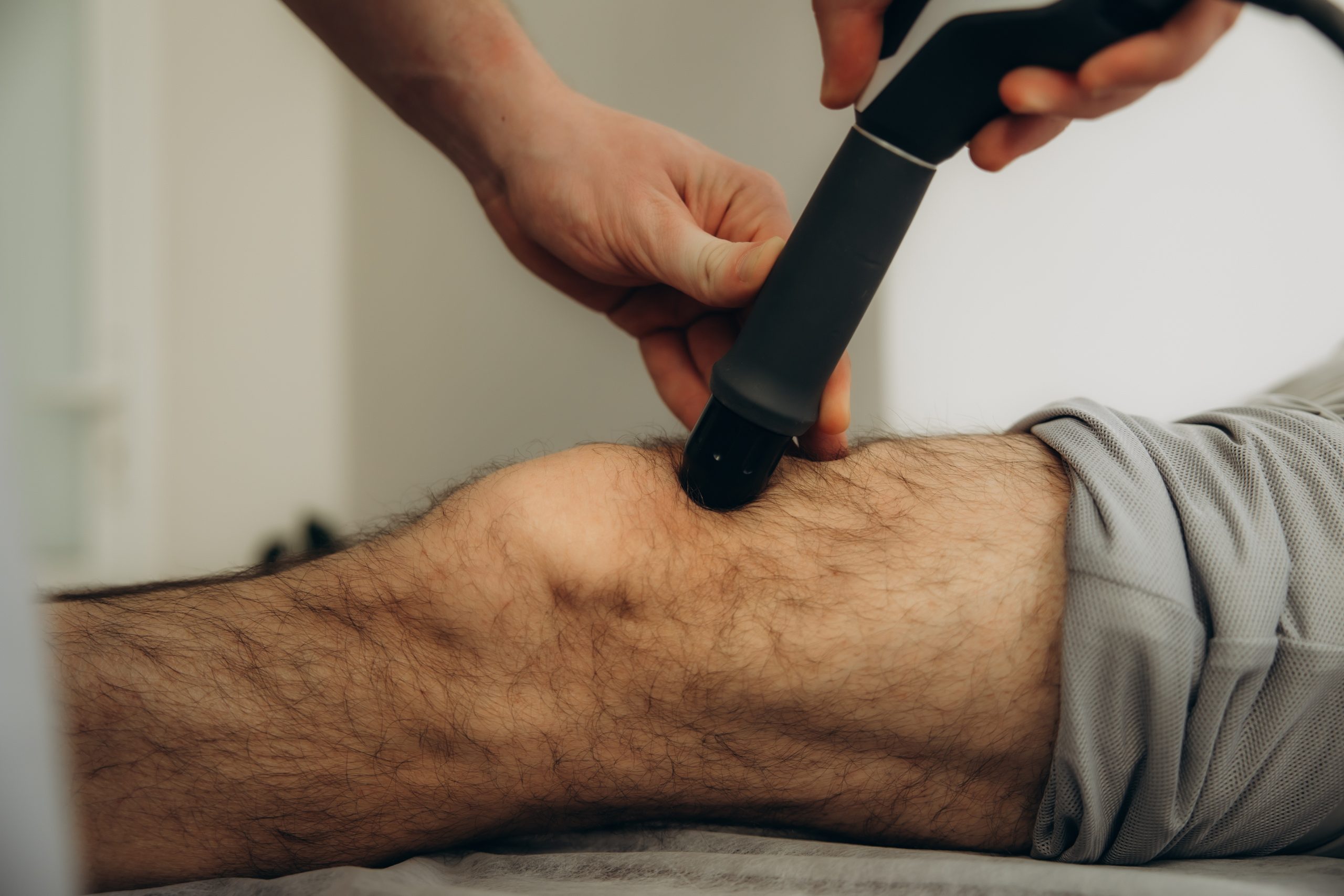
Knee Pain Physical Therapy in Pleasant Grove
Stronger knees for stairs, squats, sports, and everything in between.
Knee pain has a way of showing up in all the moments you’d rather not notice it—getting out of the car, going downstairs, standing at work, chasing kids, or trying to stay active. Maybe your knee is stiff in the morning, sore after workouts, or it complains every time you squat, kneel, or pivot.
At Timpanogos Physical Therapy (Timpanogos PT), we treat a wide range of knee issues—patellofemoral pain, meniscus irritation or tears, ligament sprains, patellar and quadriceps tendinopathy, early arthritis, and post-surgical stiffness. We use a modern mix of shockwave therapy, electromagnetic therapy (EMTT), manual therapy, targeted exercise, and red / near-infrared light therapy to help people get back to the activities they enjoy.
In many cases—especially with degenerative meniscus problems and long-standing tendon pain—we’ve been able to help patients avoid or delay knee surgery by changing how the knee feels, moves, and handles load.

Knee problems we see all the time
- Front-of-knee pain with stairs, squats, or sitting (patellofemoral pain)
- Meniscus-type pain: catching, joint-line tenderness, discomfort with twisting or deep bending
- Patellar or quadriceps tendinitis/tendinopathy—pain at the top or bottom of the kneecap
- Early arthritis with stiffness, mild swelling after activity, and “grinding” sensations
- Post-surgical knees (scope, ACL, replacement) that are slow to regain motion or strength
- Ligament sprains (ACL, MCL, LCL) that need a structured rebuilding plan
- Knees that nag after hiking, running, playing sports, or long workdays on your feet
If you’re turning down activities, changing how you move, or planning your day around what your knee might tolerate, it’s worth giving it some focused attention.
Why does knee pain hang around
Knees sit between the hip and ankle, which means they take the hit when things above or below aren’t working well. Ongoing pain usually involves a mix of:
- Tissues that got overloaded—cartilage, tendon, meniscus, or ligaments
- Muscles that lost strength or timing, especially the quads and hips
- Stiff hips or ankles that force the knee to twist or work overtime
- Movement patterns that were fine for a while but don’t match current demands
- Incomplete or rushed rehab after a sprain, surgery, or old injury
Our job is to figure out what’s actually driving your symptoms now—not just what a scan says—and then help your knee handle life better.
Helping people avoid surgery when it’s reasonable
Not everyone with a meniscus tear, cartilage wear, or kneecap pain needs surgery. For many people—especially with degenerative meniscus changes, patellofemoral issues, and tendon problems—a well-designed rehab plan can:
- Bring pain down to a manageable level
- Restore strength and control around the knee
- Improve confidence with stairs, squatting, and everyday tasks
Over the years, we’ve seen many patients who were considering meniscus or other knee surgeries make enough progress with shockwave therapy, EMTT, manual therapy, and progressive strengthening that they chose to stay active without going to the operating room—at least for the time being.
We still work closely with orthopedic providers. Some knees truly do need surgical care. But when it’s appropriate, we believe in giving conservative treatment a real chance first.
How do we help your knee
Shockwave Therapy
We use shockwave therapy around the knee to:
- Target stubborn patellar and quadriceps tendon pain
- Address sensitive, overloaded regions around the joint line
- Assist tissue remodeling in tendons and soft tissues that have been irritated for a long time
Combined with the right strength work, this can make activities like stairs, squats, and getting up from a chair feel more manageable and less sharp.
Electromagnetic Therapy (EMTT)
EMTT uses pulsed electromagnetic fields around the knee and surrounding muscles to:
- Help tight, overworked muscles relax
- Support local circulation in sore areas
- Make it easier to tolerate strengthening and functional training
It’s a helpful add-on when the knee and surrounding tissues are extra sensitive.
Manual Therapy
Hands-on work may include:
- Joint mobilizations to help the knee bend and straighten more comfortably
- Soft-tissue treatment to quads, IT band, hamstrings, calves, and tissues behind the knee
- Mobilizing the hip and ankle when there is stiffness, putting extra strain on the knee
This opens the door for better movement and makes exercise feel less restricted.
Strength, control & real-world movement
This is where your knee builds lasting resilience.
We’ll create a progressive program that can include:
- Early-phase exercises to wake up and re-educate the quads, hamstrings, and hips
- Specific loading strategies for patellar and quadriceps tendons—often using slower, controlled movements and appropriate resistance
- Glute and hip strengthening to support knee alignment during walking, squats, and stairs
- Balance and dynamic stability work, especially if cutting, pivoting, or uneven terrain is part of your life
- A gradual return to what matters most to you—whether that’s walking the neighborhood, hiking, running, sports, or keeping up with family
Your plan is built around your activities and goals—not just what you can do in the clinic.
Red & Near-Infrared Light Therapy
We often use red and near-infrared light therapy around the knee to:
- Support recovery after strength or activity days
- Help manage post-exercise soreness or mild swelling
- Promote tissue health without adding extra impact or load
It’s a comfortable way to finish a session and help your knee feel ready for the next step in your day.
What progress can look like
- Walking farther and longer with less discomfort afterward
- Taking stairs and hills more confidently
- Squatting, kneeling, or getting up from the floor with less hesitation
- Returning to workouts, sports, or hobbies that you’d backed away from
- For some, shifting from “I’m resigned to surgery” to “I’m functioning well with good conservative care”
Frequently Asked Questions
Do I need an MRI before starting?
Can this help if I’ve been told I have a meniscus tear or arthritis?
Will I have to stop all exercise?
What if my knee has been painful for years?
Ready to move with more confidence?
If your knee has been limiting how far you walk, how hard you train, or what you feel comfortable saying “yes” to, there’s a lot we can do to help. Schedule an evaluation with Timpanogos Physical Therapy, and we’ll build a clear, realistic plan to help your knee feel stronger, more capable, and better prepared for the way you actually live.


Ready to get started?
Book Appointment