
Expert Acute Strains and Sprains Rehab | Timpanogos PT!
Acute Strains/Sprains
Twisted, pulled, or “tweaked something”? Let’s get on top of it early.
Rolling an ankle, pulling a hamstring, tweaking your back during a lift, or jamming a wrist in a game can change your plans in a hurry. You might be wondering:
- “Is this just a tweak or something serious?”
- “Do I need to rest, brace it, or keep moving?”
- “How do I get back to my sport without this becoming a long-term problem?”
At Timpanogos Physical Therapy, we help people navigate that exact moment—the first days and weeks after an acute strain or sprain—so it heals well the first time instead of becoming your “same old injury.”
We blend careful assessment with shockwave therapy, EMTT (electromagnetic therapy), hands-on treatment, targeted exercise, and red / near-infrared light therapy to support healing and guide you back to the things you enjoy. And when it’s appropriate, we can order X-rays or MRIs directly through our clinic so you don’t have to bounce between providers to get answers.
In Utah, PTs are the primary care providers for musculoskeletal problems
Utah recently passed a law recognizing licensed physical therapists as primary care providers for neuromusculoskeletal conditions—things like sprains, joint pain, back and neck issues, and movement problems.
- You can choose a physical therapist as your first point of contact for pain, stiffness, and injuries—without needing a physician referral first.
- The law was designed to reduce extra appointments, shorten wait times, and lower overall healthcare costs by letting patients go straight to the movement specialist who will treat the problem anyway.
So for sprains, strains, and most other musculoskeletal injuries, we’re not just part of your care team—we’re the provider you should see first.
What counts as an “acute strain or sprain”?
This page is for recent injuries like:
- Ankle sprains from a misstep, landing, or cutting move
- Hamstring, quad, or calf pulls during running, jumping, or sprinting
- Groin strains with change-of-direction sports
- Shoulder strains or AC sprains from falls or overhead lifting
- Wrist and hand sprains from bracing during a fall
- Neck or back strains after lifting, twisting, or collisions
If it happened suddenly, in the last few days or weeks, and now you’re sore, stiff, and unsure how much to use it—this is you.
Get urgent medical care first if you have an obvious deformity, can’t bear any weight, can’t lift or move the limb at all, have numbness/tingling that isn’t improving, or suspect a fracture. Once you’re cleared, we can guide the rehab side.
Suppose you come to us first and we suspect a fracture, a significant tear, or another serious issue. In that case, we can order an X-ray or MRI directly and ensure the results are shared with your physician for coordinated care.
What we focus on in the early phase
The first goal is simple: Protect the injury, keep you as active as is safe, and set the stage for a strong recovery.
Common early priorities:
- Rule out red flags (fracture, complete rupture, serious joint injury)
- Manage swelling and pain without over-resting
- Maintain as much safe motion as the tissue allows
- Start light activation and loading earlier than most people expect—at a level your body can handle
Done right, this reduces the risk of:
- Lingering weakness
- Chronic stiffness
- That injury is becoming “the thing that always flares up”
If your exam suggests that imaging would change the plan, we’ll explain why and can order the appropriate X-ray or MRI directly from our clinic.
How we treat acute strains & sprains
Skilled assessment & a clear plan
We start by figuring out:
- What tissue is involved (ligament, muscle, tendon, joint)
- How irritable it is (what it tolerates today)
- What you need to get back to—work, sport, daily life
Then we outline a plan that covers short-term steps (this week) and longer-term milestones (return to sport / normal life) so you’re not guessing about what comes next.
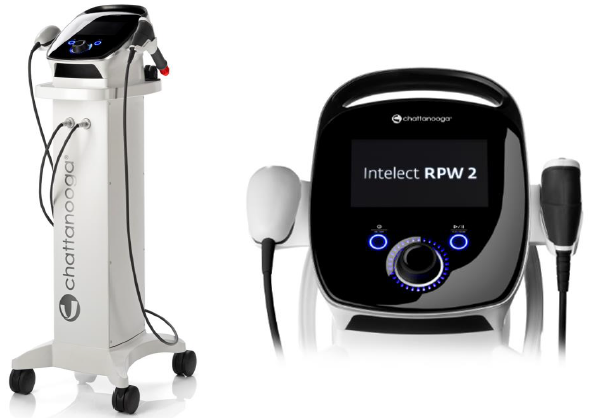
Shockwave therapy – used thoughtfully
For many ankle sprains, muscle strains, and tendon-related injuries, shockwave therapy can be a helpful part of treatment—even early on when used with the correct settings and timing.
For acute sprains/strains, we may use shockwave to:
- Address hot spots in the muscle or tendon that stay overly tight
- Encourage blood flow and early tissue remodeling
- Help reduce tenderness so you can progress to exercise more comfortably
We’re careful about how early and how strongly we use it, tailoring treatment to the specific injury and its reactivity.
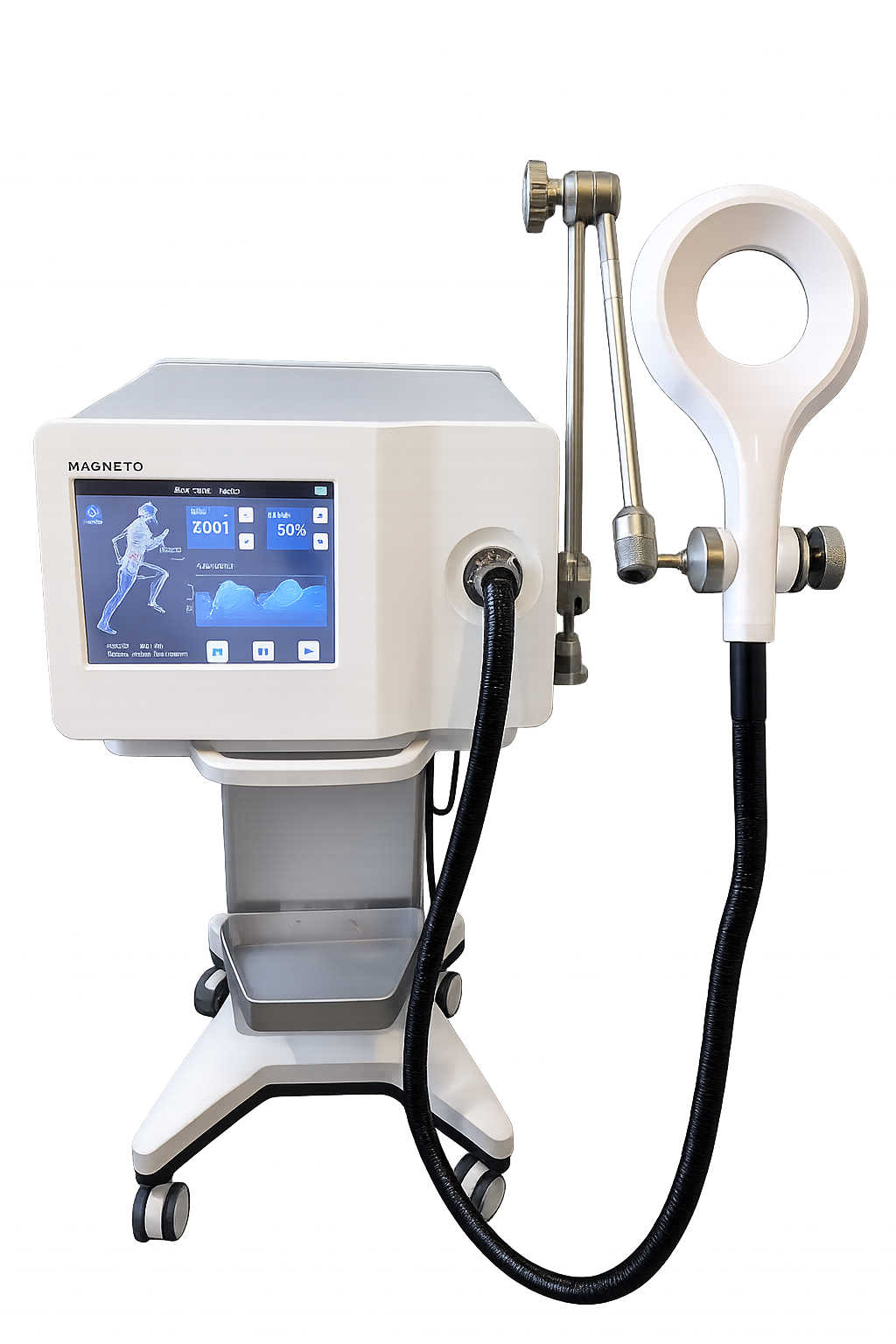
Electromagnetic Therapy (EMTT)
EMTT uses pulsed electromagnetic fields around the injured area to:
- Encourage muscle relaxation around the injury
- Support local circulation
- Help ease general soreness and stiffness
It’s a gentle add-on that can make early movement and loading more comfortable.
Manual Therapy & Taping
Hands-on care for acute injuries may include:
- Gentle soft-tissue work to help surrounding muscles relax without irritating the injured area
- Careful joint mobilization above and below the injury if there is stiffness, adding stress
- Guidance for taping, bracing, or supports when they’re helpful in the short term—this can include kinesiology taping (KT taping) to support the injured area, manage swelling, and help guide better movement while tissues heal
We move at the pace your tissue allows—no forcing, no aggressive “breaking it up” that sets you back.
Early-stage exercise & innovative progression
Movement is medicine, but only if it’s dosed correctly. We’ll guide you through:
- Protected motion so the joint doesn’t freeze up
- Low-load activation to keep muscles online (and reduce the “jelly leg/arm” feeling later)
- Gradual steps into strength, balance, and power, matched to the healing timeline
As healing progresses, that might include:
- Single-leg balance and control after ankle or knee sprains
- Eccentric and heavy-slow strengthening after muscle strains
- Plyometrics, cutting, and change-of-direction for field and court sports
We always connect what we do in the clinic to what you need on the field, at the gym, at work, or at home.
Red & Near-Infrared Light Therapy
We often add red and near-infrared light therapy to support:
- Recovery in the tissue around the injury
- Comfort after more active sessions
- Overall healing without extra mechanical stress
It’s a relaxing way to finish a treatment, especially when things are sore or fatigued.
For athletes, weekend warriors, and active families
- Rolled an ankle in a game
- Pulled a hamstring trying to sprint after a long break
- Tweaked your back or shoulder in the gym
- Got hurt playing with your kids or doing yard work
We’ll meet you where you are and help you return to the level of activity that matters to you—whether that’s full-speed sport, pain-free workouts, or simply getting through the day comfortably.
What progress can look like
- Less swelling and soreness in the first days and weeks
- Regaining normal motion without feeling blocked or scared
- Building strength and confidence in the injured area instead of babying it forever
- A clear, step-by-step path back to your sport, job, or hobbies
Frequently Asked Questions
Should I wait a few weeks before starting PT?
Can you tell me if I need imaging?
Do I have to stop all activity?
Can this help prevent future injuries?
What if I’m already under a doctor’s care?
Ready to handle this injury the right way?
If you’ve just strained or sprained something and you’re not sure what to do next, you don’t have to figure it out alone. Schedule an evaluation with Timpanogos Physical Therapy, and we’ll create a clear, practical plan to help your acute injury heal well—and get you back to what you love without dragging it out for months.


Ready to get started?
Book Appointment