1955 W Grove Parkway STE 201 Pleasant Grove, UT 84062


Shockwave Therapy
Serious healing power—when science meets clinical art
Shockwave therapy is one of the core tools we use at Timpanogos Physical Therapy. It’s not just a “last resort for chronic stuff.” We use it every day for both:
- Chronic, stubborn problems that won’t let go
- Fresh, acute injuries where we want to settle pain and jump-start healing early
Our simple philosophy is:
If it hurts, there’s a good chance we can use shockwave to help it.
We were the first clinic/practitioner in Utah County to start using shockwave and among the very first in all of Utah to bring this technology into everyday PT care. After years and thousands of treatments, it’s become one of the most trusted tools in our toolbox.
What is shockwave therapy?
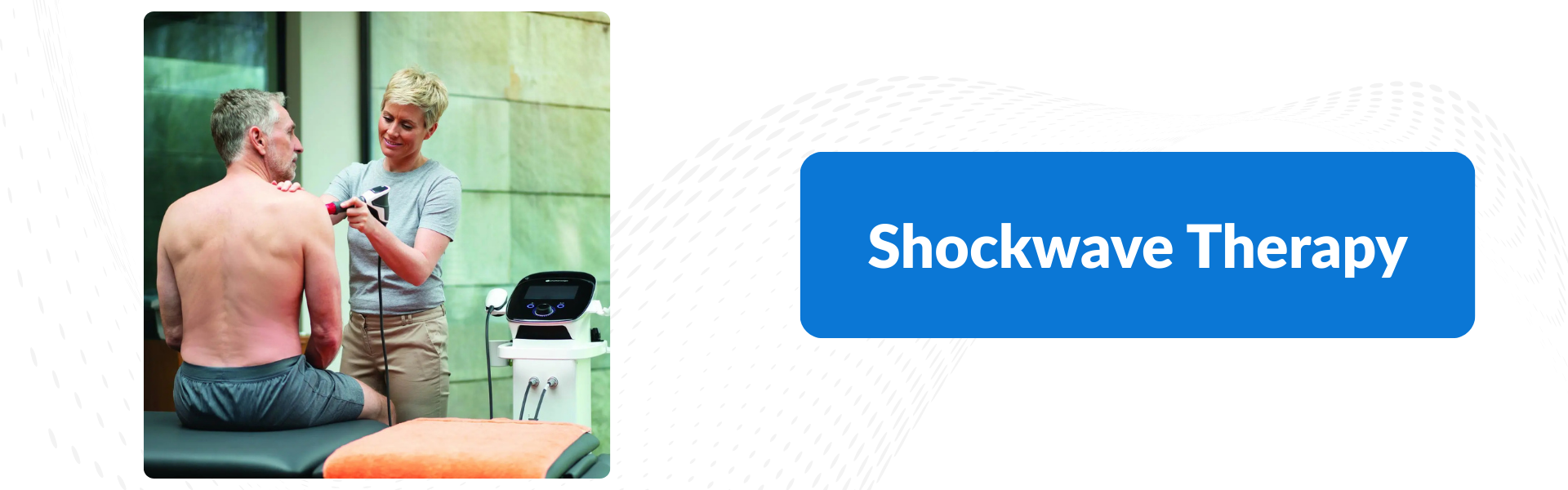
Shockwave therapy (extracorporeal shockwave therapy) uses a handheld device to deliver short pulses of mechanical energy into injured or irritated tissue.
Those pulses create controlled micro-stress that helps your body:
- Turn on healing pathways (mechanotransduction)
- Improve local blood flow and tissue metabolism
- Encourage the breakdown and remodeling of stubborn scar tissue or calcifications
- Dial down pain sensitivity in irritated nerve endings
In plain terms: instead of numbing the area, shockwave nudges your body to repair and reorganize tissue that’s stuck in a painful state.
Acute and chronic: when we reach for shockwave
Most people hear about shockwave for chronic issues like plantar fasciitis or tennis elbow—and it’s fantastic for those. But we also see incredible results in acute and subacute injuries when the timing and dosing are right.
Chronic problems we treat all the time
- Plantar fasciitis/heel pain
- Achilles tendinopathy
- Patellar tendinopathy (“jumper’s knee”)
- Tennis elbow/golfer’s elbow
- Rotator cuff and shoulder tendinopathy
- Gluteal tendinopathy / lateral hip pain
- Long-standing muscle and fascia pain that never quite clears
Acute and recent injuries we treat with shockwave
- New ankle and foot sprains
- Fresh Achilles or calf strains
- Hamstring, quad, and hip flexor strains
- New shoulder or elbow overload from sport or work
- Post-surgical tissues (when appropriate) that are painful, thick, or slow to calm down
With acute issues, our goal is to calm the fire early, support tissue healing, and help you return to activity with less downtime.
Why is Shockwave both science and art
The “science” is the physics and the device. The art is everything else:
- Knowing exactly where to treat (often not just the prominent sore spot)
- Choosing the correct depth, intensity, and frequency
- Deciding how many pulses, how often to repeat, and when to change strategy
- Pairing it with the proper exercise, manual work, and other tools so improvements actually stick
Two clinics can use the same machine and get very different results. The difference is experience.
At Timpanogos PT:
- We were early adopters of shockwave in Utah.
- We’ve treated thousands of cases with it—from weekend warriors to post-surgical patients to “I’ve had this for 10 years, and nothing has worked.”
- We’ve seen what tends to respond best, what needs a gentler approach, and how to adjust on the fly based on your tissue’s reaction.
If you’ve tried shockwave somewhere else and didn’t notice much change, it’s very often a targeting and dosing problem, not a you-problem. That’s the gap we aim to close.
What a session feels like
A typical shockwave visit looks like this:
- We find the true target areas by exam and palpation (and sometimes chase a few “hidden” spots you didn’t even know were involved).
- Gel goes on the skin; the handheld applicator goes on the area.
- You feel a series of rapid taps or pulses in the tissue—strong enough to feel like something is happening, but always within a tolerable range.
- We adjust the intensity and frequency based on your feedback and tissue response.
Common experiences:
- A sense of “pressure” or deep tapping during treatment
- Some temporary soreness, like the area got a focused workout
- A feeling of “lightness,” less sharpness, or better mobility after a few sessions
And importantly, we keep talking to you through the process. This is a live, adjustable treatment, not “turn on the machine and walk away.”
How shockwave helps tissue change
Here’s what we’re aiming for over the course of treatments:
- Less pain sensitivity
- Shockwave can help quiet down overly reactive pain fibers in localized areas, so movement doesn’t trigger the same alarm bells.
- Better blood flow and tissue health
- The micro-stress can stimulate new capillary growth and improve circulation in tissue that’s been “underfed” for a long time.
- Breaking the chronic cycle
- Many tendons and fascia get stuck in a “stalled healing” pattern. Shockwave provides a new mechanical signal that pushes them toward remodeling rather than just staying irritated.
- Improved mobility and load tolerance
- Over time, tissues become more pliable, less thick and ropey, and better able to handle the forces you put through them.
Then we reinforce those gains with targeted exercise and movement retraining so you don’t slip right back into the old pattern.
How do we combine shockwave with other treatments?
Shockwave shines brightest as part of a combo approach, not as a solo act. At Timpanogos PT, we frequently pair it with:
EMTT (Magnetotransduction Therapy)
- Great for deeper, regional pain and joint issues
- Shockwave handles focal hot spots; EMTT addresses the broader area and deeper structures
Manual therapy
- Hands-on work to free up joints, fascia, and muscle tension around the problem area
- Makes it easier for you to move well once pain is reduced
Therapeutic exercise
- Strengthening the right muscles to offload painful tissues (glutes for hips/knees, calves for feet/ankles, scapular/rotator cuff for shoulders, etc.)
- Gradual load progression so you can return to sport, work, and daily life confidently
Red & near-infrared light
- Used as a relaxing recovery boost after more active treatments
- Supports tissue healing and can ease post-session soreness
This is how we turn shockwave from “just a machine” into a complete treatment strategy tailored to your body.
Is Shockwave a good fit for you?
Shockwave may be a strong option if you:
- Have chronic tendon, fascia, or joint-related pain that hasn’t fully responded to rest, meds, or standard PT
- Recently injured something and want to get ahead of the pain and stiffness curve
- Want to avoid or delay injections or surgery when that’s reasonable
- Are willing to pair treatment with simple, targeted exercises for best results
At your evaluation, we’ll:
- Take a deep dive into your history, imaging (if you have it), and goals
- Palpate and test to see if your pain pattern is one that usually responds well to shockwave
- Talk honestly about whether shockwave belongs in your plan—and how we’d use it if it does
Ready to see what shockwave can do when it’s done well?
If you’re dealing with a new injury, a nagging tendon, or a “mystery” pain that won’t clear, you don’t have to live in flare-up mode forever.
Schedule a shockwave evaluation at Timpanogos Physical Therapy, and we’ll:
- Figure out what’s really driving your pain
- Decide together if Shockwave is the right tool (or one of them)
- Build a treatment plan that blends shockwave, EMTT, hands-on care, and smart exercise
So you’re not just chasing pain—you’re actually changing the tissue and getting back to the things you care about.