1955 W Grove Parkway STE 201 Pleasant Grove, UT 84062


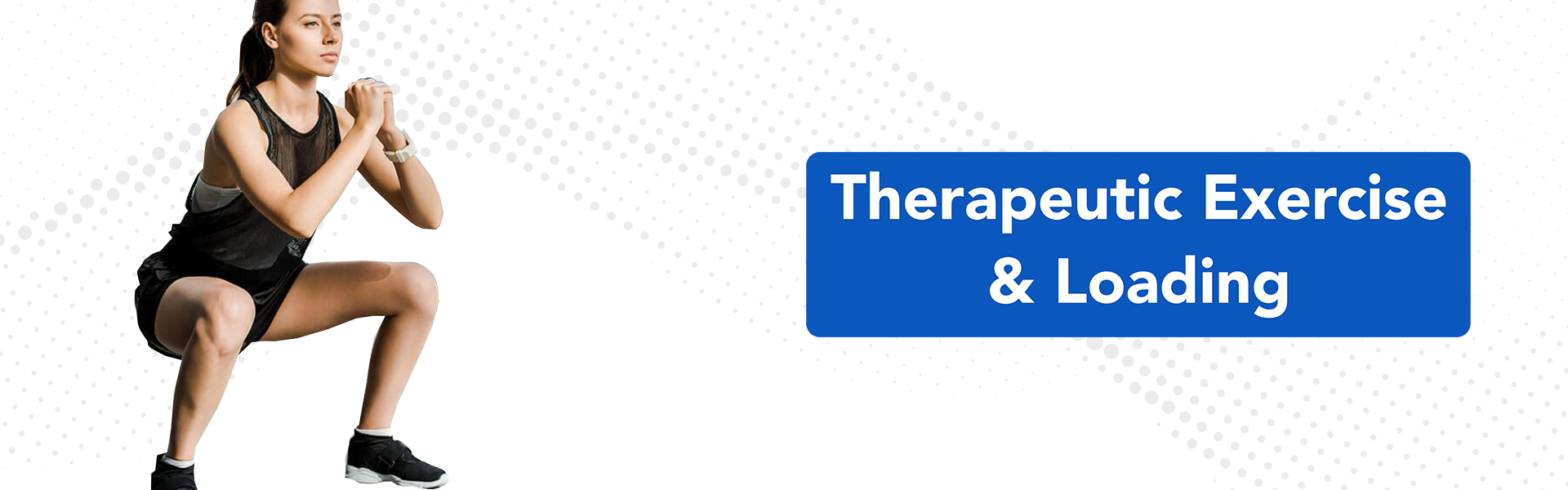
Therapeutic Exercise & Loading
Smart movement is what makes everything stick
We love our tech at Timpanogos Physical Therapy—shockwave, EMTT, EMS body sculpting, red light, Emstrong—but at the end of the day, one thing never changes:
Your body gets better by learning to move and handle a load again.
That’s what therapeutic exercise and progressive loading are all about.
Fancy tools can calm pain, wake up tissues, and speed healing. Exercise and loading are what tell your body, “This is how strong we need to be now,” so your results actually last.
What is “therapeutic loading,” really?
It’s not just “stretch this” or “do three sets of 10.”
Therapeutic exercise and loading means we:
- Find the correct movements for your body and your diagnosis
- Use the right amount of stress (enough to create change, but not enough to blow you up)
- Progress the challenge over time so tissues adapt and get more resilient
We’re looking at:
- Muscles (strength, endurance, coordination)
- Tendons and ligaments (tolerance to load)
- Joints (mobility and control)
- Nervous system (confidence, pain sensitivity, and movement patterns)
Instead of avoiding everything that hurts forever, we help you rebuild tolerance in a planned, safe way.
What we use exercise and loading for
Just about everything that walks through the door:
- Neck, back, and spine pain
- Shoulder, hip, knee, and ankle issues
- Tendinopathies and bursitis
- Post-surgical rehab (spine, shoulder, hip, knee, foot/ankle, elbow/wrist/hand)
- Sports injuries and overuse
- Arthritis and chronic stiffness
- Pelvic floor and core (often with Emstrong and EMS sculpting)
- Nerve conditions like neuropathy or radiculopathy (with bright loading around symptoms)
If there’s pain, weakness, tightness, or loss of function, there’s almost always a loading problem underneath it that we can help solve.
How we build your exercise & loading plan
1. Start where you actually are
We don’t hand you a generic sheet and call it good.
We look at:
- How you move
- What flares you up
- What you can do without making things angry
- Your schedule, life, and stress (because none of this happens in a vacuum)
Then we build a plan that fits your current capacity, not some idealized version of you.
2. Match the load to the tissue
Different problems need different types of loading. We think about:
- Tendons – Love slow, heavy, controlled work and progressive loading
- Joints & cartilage – Need repeated, tolerable movement and compression to stay healthy
- Muscles – Need a mix of strength, endurance, and power
- Nervous system – Needs graded exposure to movements it currently “doesn’t trust”
So patellar tendinopathy won’t get the same plan as sciatic nerve irritation, even if both show up as “knee” or “leg” pain.
3. Keep it doable and honest
Your plan will be:
- Short, clear, and realistic
- Designed around what you can actually do at home or in the gym
- Flexible so that we can tweak on the fly as your body talks back
We’d rather have you consistently do 2–3 good exercises than feel guilty about a long list you never touch.
How our tech supports loading (not replaces it)
A considerable part of what makes your program work is that we use our other tools to set the stage for exercise, not to avoid it.
Shockwave therapy
- Helps decrease pain and sensitivity in tendons, fascia, and stubborn soft tissue
- Breaks up thick, ropey areas so they can handle the load more comfortably
- Makes it easier to start the strengthening and loading work that actually remodels the tissue
EMTT (Magnetotransduction therapy)
- Targets deeper, regional pain and joint irritation
- Calms reactive tissue so you’re not guarding every time you move
- Opens the door for better spine, hip, knee, or shoulder loading
EMS body sculpting (muscle building)
- Drives strong, repeated contractions in weak or inhibited muscles
- Great for quads after knee surgery, glutes after hip/back problems, or core after pregnancy or injury
- Gives us a head start, then we layer in active strengthening so your brain learns to use those muscles
Emstrong pelvic floor chair
- Delivers thousands of pelvic floor contractions in a session
- Helps people who can’t feel or control their pelvic floor well enough to do traditional exercises
- We then add simple pelvic and core drills so control shows up in real life
Red & near-infrared light
- Supports healing, energy production, and recovery in muscles and joints
- Makes it easier to bounce back between more complex rehab or training days
All of that is so you can handle more load, more comfortably, and make faster progress.
What a session focused on exercise & loading might look like
A visit with a significant exercise component could include:
- Re-checking your symptoms and movement – what’s better/worse since last time?
- Targeted prep work – shockwave, EMTT, manual work, or red light to calm hot spots or wake up sluggish areas.
- Key exercises and loading drills, such as:
- Slow, heavy calf raises for Achilles or plantar fascia
- Controlled squats, step-downs, and lunges for knee/hip
- Rotator cuff and scapular work for the shoulder
- Core and pelvic stability drills for back and pelvic floor issues
- Balance and plyometric progressions for return to sport
- Progression decisions – can we add load, complexity, or speed? Or do we need to hold/modify?
- A short, clear home plan until we see you again.
You’re not just counting reps; you’re learning how to move and load your body in a way that makes you stronger, safer, and more confident.
Is this “gym stuff” I could do on my own?
If it were that simple, you probably wouldn’t be reading a PT website.
The value we add is in:
- Choosing the right starting point (most people either under-load or overdo it)
- Knowing how to progress when you’re healing, not just “getting fit”
- Understanding how to work around pain without ignoring it
- Integrating your exercises with hands-on care and technology that changes tissue quality and pain sensitivity
Could you do squats at the gym? Sure.
Do you know exactly how deep, how heavy, how often, and how to adjust when your knee talks back? That’s where we come in.
FAQs
Will I have to do a ton of exercises every day?
No. We aim for a small number of high-value exercises you’ll actually do. As you improve, your program may change, but it shouldn’t feel like a part-time job.
What if exercise usually makes my pain worse?
That’s precisely why we pay so much attention to the starting point, dose, and progression. We’ll also use techniques like shockwave, EMTT, red light, and manual work to reduce your system’s sensitivity so movement is more tolerable.
Can you work with my gym or sports program?
Absolutely. We can coordinate with what you’re already doing—whether that’s lifting, running, a sport, or group classes—and help you adjust it so it supports healing rather than fighting it.
Ready for a plan that actually changes how your body handles life?
If you’re tired of resting, flaring, and repeating—or you’ve tried “just exercising” and it hasn’t fixed the problem—
Schedule an evaluation at Timpanogos Physical Therapy, and we’ll:
- Figure out what needs to get stronger, more mobile, or more tolerant
- Build a loading plan that meets you where you are and moves you forward
- Support it with the right mix of shockwave, EMTT, EMS, Emstrong, red light, and hands-on care
So you’re not just hoping that time and random workouts fix things—you’re training your body, on purpose, to handle the life you actually want to live.