1955 W Grove Parkway STE 201 Pleasant Grove, UT 84062


Red & Near-Infrared Light Therapy
Calm inflammation. Support healing. Recover better.
At Timpanogos Physical Therapy, we use medical-grade red and near-infrared (NIR) light therapy as a gentle, non-invasive way to support healing, reduce pain, and help your body recover from injury, surgery, and everyday training.
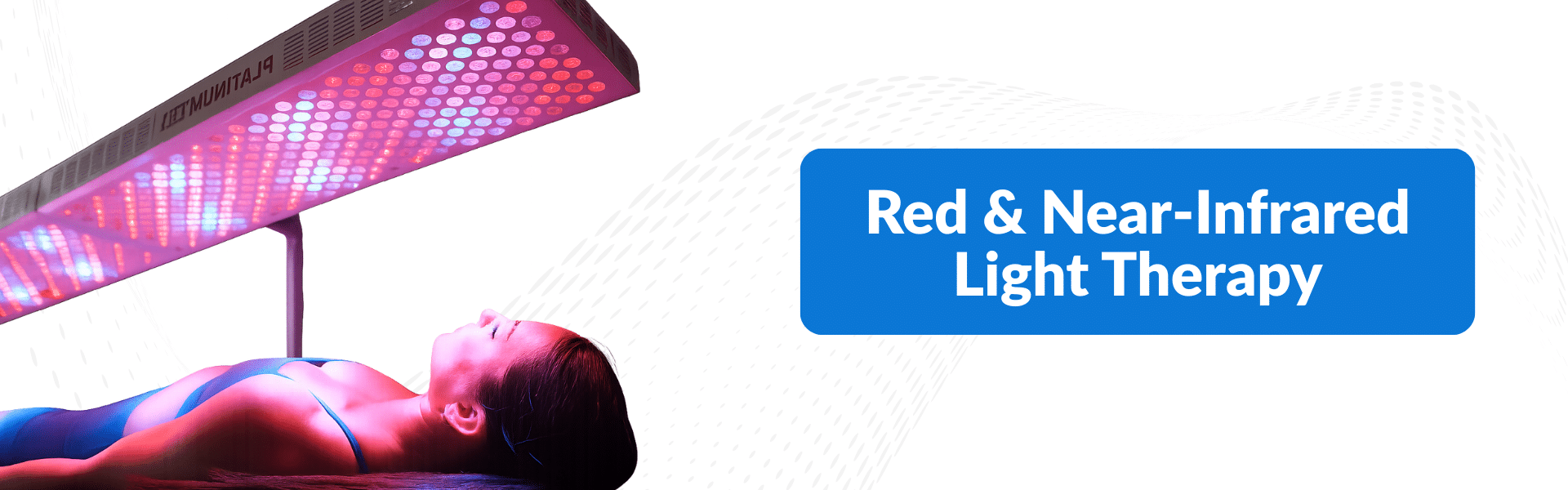
Our setup is a “light bed” style system: you lie comfortably while PlatinumLED panels are positioned overhead, so you get a full-body treatment in each session.
We use PlatinumLED because their BioMax devices are:
- Certified medical-grade (ETL IEC 60601) and designed to meet strict safety and performance standards
- FDA-registered, low-risk wellness/medical devices explicitly built for therapeutic use
- Consistently rated among the top panels for power density, wavelength mix, and build quality in independent reviews
In short: you’re not under a pretty red lamp—you’re under research-grade hardware that’s designed to match what’s used in the photobiomodulation (PBM) literature.
What is red light therapy?
Red light therapy—also called photobiomodulation (PBM)—uses specific wavelengths of red (≈620–700 nm) and near-infrared (≈700–1000 nm) light to stimulate your cells gently.
Unlike UV, these wavelengths don’t burn or tan the skin. Instead, they act as a subtle signal that helps tissues:
- Produce more energy (ATP)
- Modulate inflammation and oxidative stress
- Support microcirculation and tissue oxygenation
- Turn on genes involved in repair and resilience
Over the past few decades, PBM has been studied for:
- Musculoskeletal pain and arthritis
- Tendon and ligament injuries
- Wound and scar healing
- Neuropathy and nerve-related issues
- Skin quality, acne, and hair loss
- Brain and concussion-related symptoms
How does it work?
The short version: your cells are light-sensitive.
Red and NIR photons are absorbed by structures in your cells—especially mitochondria (through enzymes like cytochrome c oxidase). That triggers a cascade:
- Increased ATP (energy) production
- Temporary release of nitric oxide and changes in blood vessel tone → better circulation
- A small, controlled ROS signal that nudges cells toward repair rather than chronic inflammation
- Activation of transcription factors that regulate inflammation, growth, and collagen production
Clinically, that can translate to:
- Less pain and sensitivity
- Better tissue quality and mobility
- Faster recovery between sessions or workouts
- Support for skin and scar remodeling
How we use red light therapy in the clinic
We don’t treat red light as a stand-alone “miracle cure.” It’s part of a stacked approach with shockwave, EMTT, manual work, and exercise.
1. Pain, joints, and tissue healing
PBM has been shown to help reduce pain and improve function in osteoarthritis, tendinopathies, and general musculoskeletal pain, mainly when correct doses are used.
In our setting, we often use red/NIR light to support:
- Sore knees, hips, shoulders, and spine
- Tendon and ligament irritation
- Post-injury or post-surgical healing (alongside your main rehab program)
Think of it as an upgrade to the healing environment while we also fix strength, mobility, and mechanics.
2. Muscle recovery & athletic performance
There’s a growing body of research showing that PBM applied before or after exercise can:
- Improve muscle performance and torque
- Reduce delayed onset muscle soreness
- Speed muscle recovery by supporting mitochondrial function and moderating inflammation
Because of this, many professional and collegiate teams now use red light beds and panels in their training facilities as a standard recovery and performance tool—not just a luxury.
We use full-body red light sessions to help:
- Athletes and active adults bounce back faster between hard days
- Support return-to-sport programs (especially when we’re already loading tissues with shockwave, EMTT, and strengthening)
- Older or deconditioned patients who are just ramping up activity and need extra recovery support
3. Concussion & brain-related support (as part of a larger plan)
Red and NIR light applied over the head—transcranial photobiomodulation—is being actively studied for concussion, traumatic brain injury, and other neurological issues. Early research suggests possible benefits on inflammation, mitochondrial function, blood flow, and cognitive symptoms.
In our clinic, we:
- Use red/NIR light as a supportive tool alongside vestibular rehab, VOR exercises, and graded return to activity
- Follow conservative, research-inspired parameters
- Emphasize that it’s one piece of a comprehensive post-concussion plan—not a replacement for medical care or structured rehab
If concussion or post-concussion symptoms are on your radar, we’ll screen thoroughly and coordinate with your other providers as needed.
4. Skin, scars, and surface healing
Dermatology and aesthetic research has found that red light can support:
- Collagen production and improved skin texture
- Wrinkle and fine-line reduction
- Reduced inflammatory skin conditions (like acne)
- Better wound and scar quality over time
In a rehab context, we lean on red light to help:
- Improve the feel and flexibility of surgical scars
- Calm irritation in areas that are working hard in PT
- Support local tissue health around chronic problem zones
Why PlatinumLED, specifically?
When we chose a system, we looked for:
- A mix of red and NIR wavelengths matching what’s widely used in PBM research
- Meaningful irradiance at realistic treatment distances
- Strong safety and performance certifications (not just marketing)
PlatinumLED BioMax devices:
- Are ETL IEC 60601 certified as medical-grade light therapy equipment, with additional electrical safety approvals
- Use a multi-wavelength “R+ | NIR+” spectrum designed to cover several key therapeutic peaks in the red and NIR bands
- Are recognized as low-risk general wellness/medical devices and are widely used in clinical and high-end home settings
Many people notice that the system feels “different” from smaller consumer gadgets: stronger, more immersive, and designed for efficient full-body sessions rather than tiny spot treatments.
What a session looks like
Your experience is simple and low-stress:
- You lie down on our cushioned light-bed setup, with PlatinumLED panels positioned overhead for full-body exposure.
- We set the distance and duration based on your goals (pain, recovery, concussion support, skin/scar, etc.).
- Sessions usually last 10–20 minutes, depending on the plan we’ve built.
- The light feels like gentle warmth and brightness. Most people close their eyes and relax; if you’re light-sensitive, we can provide simple eye covers or adjust intensity.
There’s no downtime. You can go straight into the rest of your PT session or back to your day.
Safety
Within appropriate dose ranges, red and near-infrared PBM has a strong overall safety profile:
- Reviews in dermatology and aesthetics report good tolerability and minimal adverse events, even with repeated use over months.
- Clinical guidance documents emphasize correct dosing and awareness of contraindications but generally classify PBM as low risk when properly applied.
We do use extra caution or avoid treatment:
- Directly over known or suspected skin cancers
- In people with certain photosensitive conditions or on strong photosensitizing medications
We’ll continually review your medical history and meds before adding red light therapy to your plan.
What red light is not
To keep expectations real:
- It’s not a cure-all or a replacement for good rehab, strength work, or appropriate medical care.
- Dose matters—too little or too much can both miss the mark, which is why we follow research-informed parameters rather than guessing.
- It works best when it’s layered with the basics: shockwave/EMTT when indicated, smart exercise, sleep, and overall health habits.
We like red light because it’s low risk, deeply researched, and a surprisingly powerful adjunct—not because it’s magic.
FAQs
Will I feel anything during the session?
Most people feel gentle warmth and brightness, sometimes with a relaxing, “chill” effect. There’s no burning, no sting, and no UV exposure.
How many sessions will I need?
It depends on the goal—acute injury, chronic pain, concussion, or skin/scar. We’ll outline a plan at your evaluation and adjust based on how you respond.
Is this what pro athletes are using?
Yes—full-body red light beds and panels are increasingly familiar with pro and Olympic athletes, as well as NCAA programs, as part of their recovery and performance routines.
Can I combine this with my regular PT?
Absolutely. That’s how we use it—on top of your core rehab program to support healing, recovery, and performance.
Want to add a little “science glow” to your recovery?
If you’re dealing with stubborn pain, slow healing, heavy training loads, or lingering post-concussion symptoms, red light therapy might be a brilliant addition to your plan.
Schedule an evaluation at Timpanogos Physical Therapy, and we’ll:
- Figure out what’s really driving your symptoms
- Decide if full-body red & near-infrared light therapy makes sense for you
- Blend it with the right mix of shockwave, EMTT, manual care, and targeted exercise
So you’re not just hoping time fixes things—you’re giving your body another evidence-backed tool to heal, recover, and perform.