1955 W Grove Parkway STE 201 Pleasant Grove, UT 84062



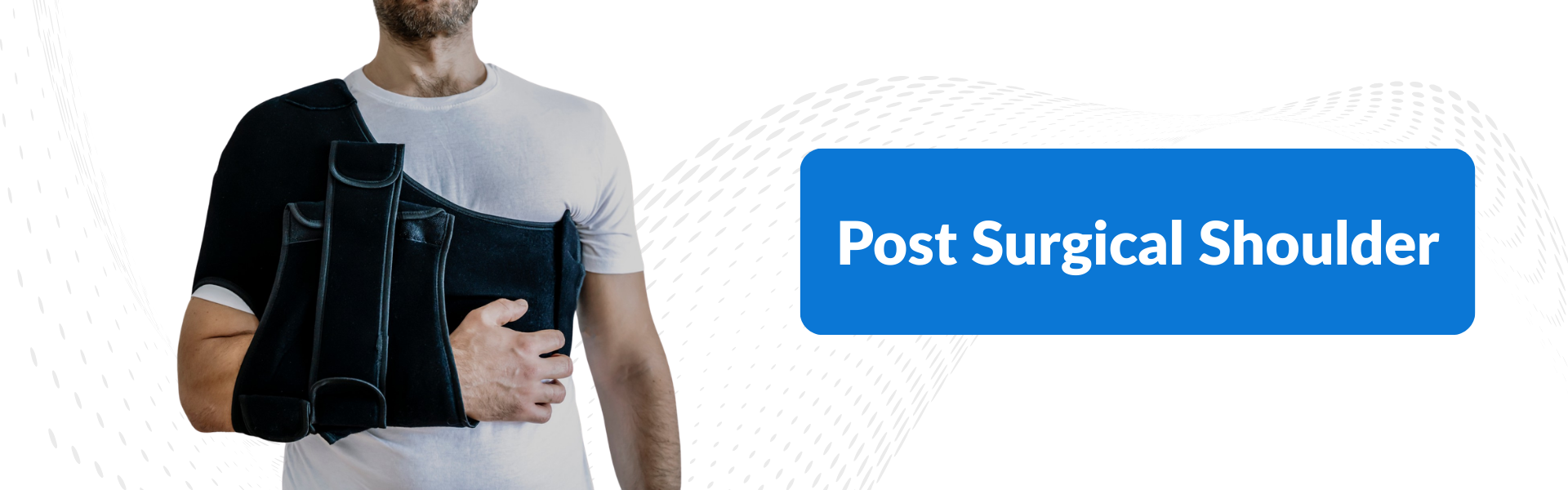
Post-Surgical Shoulder Rehab
From sling and stiffness back to reaching, lifting, and living.
You’ve made it through shoulder surgery—now you’re home with a sling, some precautions, and a list of exercises that may or may not make sense. Meanwhile, you’re thinking:
- “Why is my shoulder this tight?”
- “Am I moving it enough… or too much?”
- “Will I ever sleep on this side again?”
That middle ground—after surgery but before you feel functional again—is where Timpanogos Physical Therapy comes in. Our job is to help you move from protecting the repair to using your shoulder confidently in everyday life.
Shoulder surgeries we commonly rehab
We regularly help people after:
- Rotator cuff repair (all sizes)
- Labral repairs (SLAP, Bankart, other stabilization procedures)
- Biceps tenodesis / tenotomy
- Subacromial decompression
- AC joint procedures
- Total or reverse shoulder replacement
- Fracture fixation (plates, screws, pins)
- Other shoulder surgeries where stiffness, pain, or weakness are hanging on longer than expected
We follow your surgeon’s protocol and precautions (sling time, no active motion, lifting limits, etc.) and then tailor rehab to you—not just the procedure name.
Common post-surgical shoulder struggles
After shoulder surgery, it’s very common to deal with:
- Stiffness and a tight, “sticky” feeling with any movement
- Pain at night and trouble finding a comfortable sleep position
- Weakness when trying to lift the arm or hold anything away from the body
- Feeling like the shoulder is “frozen” or doesn’t belong to you
- Soreness around the shoulder blade, neck, and upper back from compensation
- Scar sensitivity—tenderness, pulling, or burning sensations around the incision
- Fear of re-tearing or “messing up” the repair
You’re not overreacting. The shoulder is a complex joint that needs a clear, guided plan—not guesswork.
Our approach: keep it safe, keep it moving, build it back up
We’ll respect every restriction your surgeon gives—and still look for what you can safely do at each stage.
Phase 1: Protect the repair & keep the rest of you happy
Early on, the priorities are:
- Protecting the surgical repair or replacement
- Managing pain and inflammation
- Teaching you how to safely use the sling (and when you can be out of it)
- Gentle, passive, or assisted motion within your allowed range
- Keeping the neck, elbow, wrist, and upper back from getting stiff and cranky
We’ll also coach you on comfortable sleep positions and simple things you can do at home to feel less stuck.
Phase 2: Restore motion & “wake up” the shoulder
As healing progresses and you’re cleared for more movement, we’ll work on:
- Restoring flexion, abduction, and rotation as your protocol allows
- Improving scapular motion and control (how the shoulder blade moves on the rib cage)
- Gradually reducing your dependence on the sling (as cleared by your surgeon)
- Introducing gentle active motion and light muscle activation without overloading the repair
We’re aiming for a shoulder that moves more freely, without forcing it or flaring it up for days at a time.
Phase 3: Strength, control & functional use
Once your tissues are ready for it, we’ll shift the focus to:
- Rotator cuff and scapular strengthening
- Postural and upper back strength to support the shoulder
- Functional movements like reaching overhead, out to the side, behind your back, and lifting in front of you
- Progressions for work tasks, hobbies, sports, or gym activities
Whether your goal is sleeping without pain, reaching into cupboards, working overhead, or getting back to throwing/weights, we’ll build toward your real-world needs.
Where our technology fits in
Shockwave therapy
Once it’s safe and the repair has had time to heal, shockwave therapy can be a powerful tool for the shoulder. We may use shockwave for:
- Persistent rotator cuff or biceps tendinopathy near the shoulder
- Ongoing soreness around the greater tuberosity, bursa region, or upper arm
- Scar tissue and sensitive incisions that feel thick, ropey, or tender
Shockwave can help:
- Decrease local pain and sensitivity
- Desensitize and remodel scar tissue, helping it move and glide more comfortably
- Support circulation and tissue quality in stubborn, irritated spots
- Make strengthening, stretching, and daily use more tolerable
We integrate it when the timing is right and always as part of a complete rehab plan—not as a stand-alone “zap and go.”
EMTT (Electromagnetic therapy)
We also use EMTT (Electromagnetic Transduction Therapy) around the shoulder to:
- Support overall recovery and tissue metabolism
- Help ease deep, achy soreness after activity or therapy
- Encourage tight, protective muscles to relax and move more freely
EMTT is non-invasive and usually used as a supportive adjunct to the real work you’re doing with exercise and manual therapy.
Red & near-infrared light therapy
Red and near-infrared light around the shoulder and upper back can:
- Support healing and recovery at the tissue level
- Help with post-session soreness
- Complement your strengthening and mobility work
It’s a simple, relaxing way to finish a rehab session, especially when we’ve challenged the shoulder a bit more.
Hands-on care & exercise: the core of shoulder rehab
The real magic is still in good movement and manual work. Your plan will include:
- Manual therapy
- Gentle joint mobilizations for the shoulder and upper back
- Soft-tissue work for the rotator cuff, pecs, upper traps, and shoulder blade muscles
- Scar care
- When appropriate, we’ll show you how to mobilize and desensitize the incision
- We may pair manual work with shockwave to help stubborn scars move and feel better
- Targeted strengthening
- Rotator cuff, scapular stabilizers, deltoid, and supporting postural muscles
- Gradual loading in directions that matter to your life
- Motor control & coordination
- Teaching the shoulder blade and arm to work together smoothly again
- Drills that build control, not just raw strength
- Movement coaching
- How to reach, lift, carry, push, pull, and sleep in ways that support healing instead of fighting it
We’ll adjust intensity and volume based on how your shoulder actually responds, not just what the calendar says.
What progress can look like
Over time, you can expect to:
- Notice less stiffness and “catching” with everyday movements
- Sleep more comfortably, with fewer position changes due to pain
- Reach overhead, out to the side, and behind your back with more ease
- Feel more confident using your arm for dressing, housework, work tasks, and workouts
- Move from avoiding your shoulder to trusting it again
The exact timeline depends on your surgery type, tissue quality, and starting strength—but you don’t have to figure it out alone.
Ready to get the most out of your shoulder surgery?
Surgery repaired or replaced structures in your shoulder. Rehab is what teaches that new shoulder how to move, carry, reach, and live again.
Schedule a post-surgical shoulder rehab evaluation with Timpanogos Physical Therapy. We’ll create a clear, personalized plan—using clever progressions, hands-on treatment, and tools like shockwave, EMTT, and red light therapy when appropriate—to help you go from “I had shoulder surgery” to “my shoulder finally works for my life again.”