1955 W Grove Parkway STE 201 Pleasant Grove, UT 84062



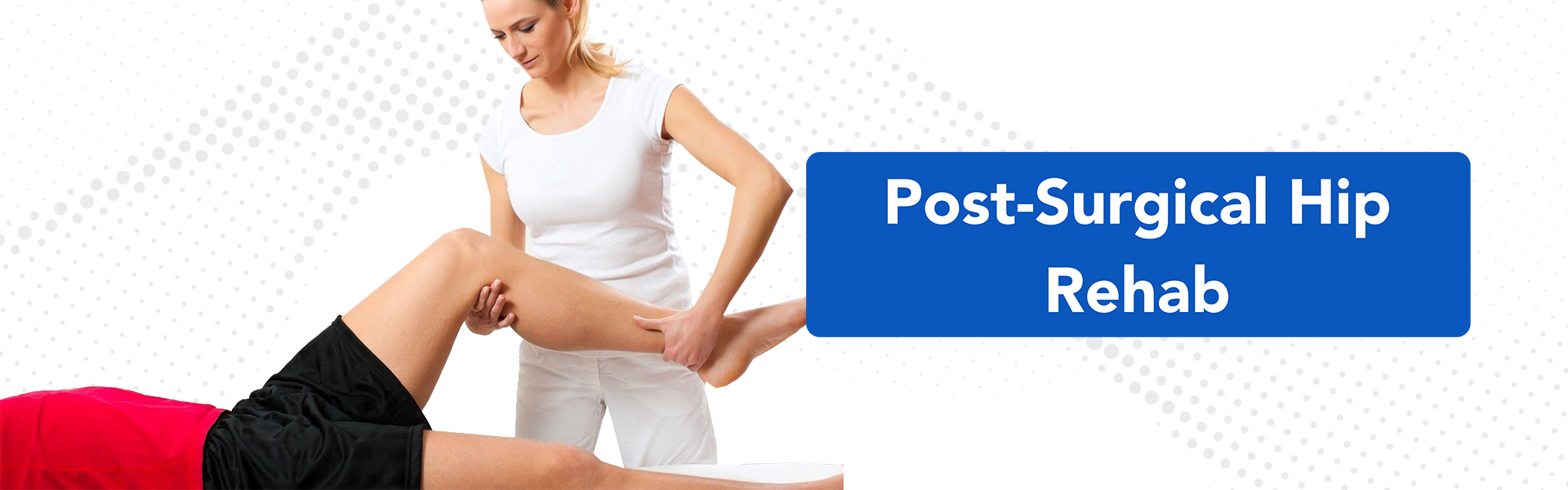
Post-Surgical Hip Rehab
New hip, better life—not just “good enough.”
You’ve made it through hip surgery—replacement, scope, labral repair, tendon repair—and now you’re home with a list of precautions, a few exercises, and a lot of questions:
- “Why does it still feel this stiff?”
- “When will I walk normally again?”
- “How far can I push it without overdoing it?”
That in-between phase—after surgery but before you feel like yourself again—is precisely what we handle at Timpanogos Physical Therapy. Our job is to help you move from healing the hip to using the hip in real life.
Hip surgeries we commonly rehab
We regularly work with people after:
- Total hip replacement (anterior, posterior, lateral approaches)
- Hip arthroscopy – labral repair, FAI (femoroacetabular impingement) procedures, debridement
- Gluteal tendon repairs
- Hip fracture ORIF (pins, plates, screws)
- Trochanteric bursectomy / IT band procedures
- Other hip surgeries where pain, stiffness, or weakness are lingering longer than you’d hoped
We follow your surgeon’s protocol and restrictions and then personalize your care from there, based on you, not just the surgery name.
Common post-surgical hip struggles
After hip surgery, it’s very normal to deal with:
- Stiffness when you first stand up or change positions
- Weakness and fatigue in the hip and leg
- A limp that shows up as the day goes on
- Trouble with stairs, low chairs, cars, and bed mobility
- Discomfort or pressure when lying on your side
- Tightness or soreness through the glutes, IT band, or low back
- Worry about doing “too much” or “messing something up”
You’re not being dramatic—hips carry a lot of your life. You need a clear, step-by-step path forward.
Our approach: clear phases, real-life goals
We’ll respect any precautions (no crossing, specific ranges, weight-bearing limits, etc.) and build your rehab around them.
Phase 1: Settle things down & get you moving
In the early stage, we focus on:
- Swelling and soreness management
- Safe position changes (bed, chair, car)
- Gentle range-of-motion within your allowed limits
- Early walking practice with an appropriate device (walker, cane, crutches)
- Keeping your other joints and muscles (back, core, opposite leg) from getting stiff and deconditioned
The goal is to protect the repair or implant and avoid “locking up” everywhere else.
Phase 2: Restore motion & smooth out your gait
As healing progresses, we start to:
- Improve hip flexion, extension, and rotation as allowed
- Work on normalized walking—shorter limp, better stride, more equal weight-bearing
- Train sit-to-stand, step-ups, and stairs in a way that respects your hip but doesn’t baby it forever
- Build early hip and leg strength so daily tasks feel easier
This is where life starts to feel more like “rehab” than “survival mode.”
Phase 3: Strength, stability & returning to what you enjoy
Once the hip is ready, we turn up the dial:
- Strengthening for glutes, quads, hamstrings, core, and calves
- Balance and single-leg control so you feel steady on your feet
- Higher-level tasks like getting on/off the floor, hiking, yard work, or gym activities
- If appropriate, gradual return to pickleball, golf, running, or other sports/activities
We’ll match your plan to your goals—whether that’s walking the dog comfortably or getting back to more demanding activities.
Where our technology fits in
Shockwave therapy
After your surgeon clears it and tissues are ready, shockwave therapy can be an invaluable tool for the hip region.
We may use shockwave for:
- Gluteal tendinopathy or pain around the greater trochanter
- Persistent lateral hip pain that feels like “bursitis”
- Stubborn IT band or muscle tightness that doesn’t respond to stretching alone
- Scar tissue and sensitive scars around the incision or outer hip area
Shockwave can help:
- Reduce localized pain and sensitivity
- Desensitize thick or tender scar tissue so touch and movement feel more comfortable
- Support tissue remodeling, helping scars and surrounding soft tissue move and glide better
- Improve circulation and tissue quality so strengthening and walking progressions are easier to tolerate
It’s typically used later in the rehab process, once basic healing is established and the area is ready for more focused work.
EMTT (Electromagnetic therapy)
We also use EMTT (Electromagnetic Transduction Therapy) around the hip region to:
- Support general recovery and circulation
- Help tight or overprotective muscles relax
- Ease some of the “achy, tired” feeling that can follow activity
EMTT is non-invasive and usually used as a supportive add-on to your exercise and manual therapy—not a stand-alone solution.
Red & near-infrared light therapy
Red and near-infrared light can be used around the hip and surrounding muscles to:
- Support tissue healing and recovery
- Help with post-session soreness
- Create a more favorable environment for your rehab work
It’s a gentle way to finish a session, especially on days when we’ve challenged the hip a bit more.
Hands-on care & exercise: the core of your rehab
Your plan will also include plenty of bread-and-butter PT:
- Manual therapy – gentle joint and soft-tissue work around the hip, low back, and pelvis to help with stiffness and comfort
- Scar care – once allowed, we’ll show you how to mobilize and desensitize your incision area safely, and may incorporate shockwave when appropriate to further decrease scar sensitivity and improve mobility
- Targeted strengthening – glutes, hip rotators, quads, hamstrings, and core, so your hip isn’t working alone
- Balance and proprioception training – stepping, weight shifts, uneven surfaces
- Movement coaching – how to sit, stand, bend, lift, and get in/out of cars or bed in hip-friendly ways
We keep things realistic and adjustable so rehab fits your life, not the other way around.
What progress can look like
As rehab moves forward, many people notice:
- Less stiffness when getting up or after sitting
- Easier walking distances with less limping
- More comfort with stairs, curbs, and uneven ground
- Better sleep positions and less night discomfort
- Confidence to do the things they’ve been avoiding for months (or years)
Everyone’s timeline is different—based on the surgery, your health, and your starting point—but you don’t have to guess whether you’re doing the right things.
Ready to get the most out of your hip surgery?
The surgery changed the joint. Now it’s time to change how you move, load, and trust that hip.
Schedule a post-surgical hip rehab evaluation with Timpanogos Physical Therapy, and we’ll create a clear, personalized plan—using clever progressions, hands-on care, and tools like shockwave, EMTT, and red light therapy when appropriate—to help you move from “I had hip surgery” to “I have my life back.”