1955 W Grove Parkway STE 201 Pleasant Grove, UT 84062



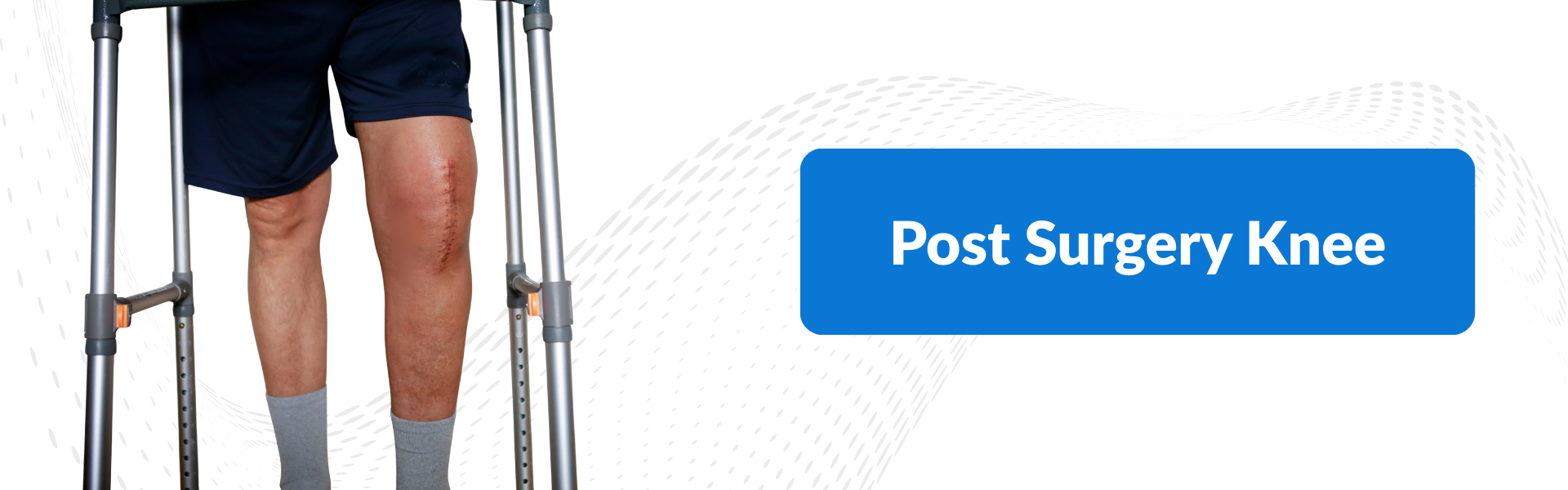
Post-Surgical Knee Rehab
From surgery and soreness back to stairs, walks, and real life.
You’ve done the hard part—knee surgery, the brace, crutches, early healing. Now you’re home thinking:
- “Why is it still this stiff?”
- “When will stairs feel normal again?”
- “Is this pain normal… or am I overdoing it?”
That “in-between” phase—after surgery, before you feel like yourself again—is exactly our lane at Timpanogos Physical Therapy. We help you move from protecting the knee to trusting the knee again.
Knee surgeries, we commonly rehab
We work with people after:
- ACL reconstruction (all graft types)
- Meniscus repair or meniscectomy
- Total knee replacement (TKR / TKA)
- Partial knee replacement
- Patellar tendon or quadriceps tendon repair
- Cartilage procedures (microfracture, OATS, etc.)
- MPFL reconstruction and other patellar stabilization surgeries
- Other knee surgeries where stiffness, pain, swelling, or weakness are hanging around longer than you expected
We follow your surgeon’s protocol and restrictions, then tailor the plan to your body, your goals, and how you’re actually responding.
Common post-surgical knee struggles
After knee surgery, it’s very normal to deal with:
- Swelling that returns as soon as you’re on your feet
- Trouble fully straightening or bending the knee
- A stiff, heavy feeling when you first stand up or move
- A limp and feeling like you can’t trust that leg
- Quad weakness—the thigh doesn’t want to “fire” or feel strong
- Pain or sensitivity around the incision/scar
- Difficulty with stairs, inclines, getting in/out of chairs or cars
Quadriceps weakness is often one of the most significant limiting factors after knee surgery. If the quad doesn’t come back well, walking, stairs, and confidence all suffer—no matter how good the surgery was.
You’re not being “behind”—you need a clear roadmap instead of guessing.
Our approach: clear phases, flexible plan
We respect your surgeon’s guidelines, but we also adjust to you—day by day.
Phase 1: Calm things down & keep things moving (safely)
Early on, we focus on:
- Managing pain and swelling
- Getting full knee extension (straightening) as early as allowed—it’s key for normal walking
- Gentle bending (flexion) within your limits
- Safe use of crutches, walker, or cane, and transitions like bed ↔ chair
- Keeping your hip, ankle, and opposite leg from getting stiff or weak
Little improvements here pay off big later.
Phase 2: Motion, muscle & smoother walking
As healing progresses and your restrictions ease, we aim to:
- Restore as much flexion and extension as your surgery allows
- Begin more focused quadriceps and hamstring strengthening
- Work on gait training so your limp gradually fades
- Progress sit-to-stand, step-ups, and stairs in a way that feels safe but productive
This is where we put a significant emphasis on getting the quad truly “online” again, not just going through the motions.
Phase 3: Strength, power & return to your life
Once the knee is ready for more:
- We build strength and endurance in the quads, hamstrings, glutes, and calves
- Add balance, single-leg control, and dynamic drills
- Introduce higher-level activities—hills, uneven ground, kneeling/squatting, getting down to the floor
- For active folks, we layer in jogging, cutting, jumping, or sport-specific drills as appropriate
Whether your goal is pain-free walking, working on your feet, hiking, or getting back to sports, we build toward what you care about.
Where our technology fits in
Shockwave therapy
Once your surgeon clears the area and we’re out of the very early healing phase, shockwave therapy can be a powerful add-on for:
- Patellar and quadriceps tendinopathy after ACL or other surgeries
- Ongoing discomfort at the patellar tendon, quadriceps tendon, or IT band
- “Hot spots” around the kneecap or tendon insertions that don’t settle with exercise alone
- Scar tissue and sensitive incision areas that feel thick, tight, or tender
Shockwave can help:
- Decrease local pain and sensitivity
- Desensitize and remodel scar tissue, helping it move and glide better
- Support circulation and tissue quality in irritated areas
- Make strengthening, walking, and higher-level activities more comfortable
We use it when timing and healing are appropriate, and always as part of a bigger rehab plan.
EMS Muscle Strengthening / Body Sculpting for Quad Recovery
Because quad strength is such a substantial limiting factor after many knee surgeries, we sometimes incorporate EMS muscle-building / body sculpting technology to help that muscle come back faster and more fully.
This technology uses powerful electromagnetic pulses to:
- Trigger strong, repeated contractions in the quadriceps and surrounding muscles
- Recruit fibers that are often “shut down” or hard to access after surgery
- Complement your active strengthening by giving the quad an extra, deep workout you usually can’t match on your own—especially early on
In the right cases, EMS muscle strengthening can:
- Help you regain quad strength more quickly
- Improve control and stability for walking, stairs, and transfers
- Support a faster, smoother return to normal activities
We’ll always talk through whether it’s appropriate for your specific surgery, stage of healing, and goals, and use it as a booster alongside good rehab—not instead of it.
EMTT (Electromagnetic therapy)
We also use EMTT (Electromagnetic Transduction Therapy) around the knee to:
- Support overall recovery, circulation, and tissue metabolism
- Help calm down overprotective muscles around the joint
- Reduce some of the deep, achy feelings that can follow activity or therapy
EMTT is non-invasive and typically used as a supportive adjunct to your exercises and manual therapy.
Red & near-infrared light therapy
Red and near-infrared light around the knee can:
- Support healing and recovery
- Help ease post-session soreness
- Complement the work we’re doing with exercise, manual therapy, and technology
It’s a simple, relaxing way to finish a session—especially on days we’ve progressed things a bit more.
Hands-on care & exercise: the main engine of your rehab
Technology helps, but the foundation is still good PT:
- Manual therapy – gentle joint mobilizations for the knee, patella, and surrounding joints, plus soft-tissue work for quads, hamstrings, calves, and IT band
- Scar management – once it’s safe, we’ll teach you how to mobilize and desensitize the incision, and may pair that with shockwave when appropriate for stubborn areas
- Targeted strengthening – especially quads and glutes, so your knee isn’t doing all the work
- Balance & proprioception – building trust in the leg with single-leg stance, step drills, and controlled challenges
- Movement coaching – how to sit, stand, squat, climb stairs, lift, and get on/off the floor without beating up your knee
We’ll explain the reasoning behind what we do and adjust the plan based on your response—not just a generic timeline.
What progress can look like
As you move through rehab, you can expect to:
- Notice less swelling and stiffness, especially in the morning or after sitting
- Walk with a smoother, more natural stride
- Handle stairs and inclines with more confidence
- Feel your leg getting stronger, not just “sore and tired”
- Return to work, hobbies, exercise, and sports with a knee that feels more dependable
Everyone’s timeline is different—type of surgery, pre-op condition, overall health—but you don’t have to figure it out alone.
Ready to get the full benefit of your knee surgery?
Surgery repaired or replaced structures inside the knee. Rehab is what teaches that new knee—and especially that quad—how to live in the real world.
Schedule a post-surgical knee rehab evaluation with Timpanogos Physical Therapy. We’ll build a clear, personalized plan—using clever progressions, hands-on treatment, and tools like shockwave, EMTT, red light therapy, and EMS muscle strengthening when appropriate—to help you move from “I had knee surgery” to “my knee lets me do what I want again.”