1955 W Grove Parkway STE 201 Pleasant Grove, UT 84062



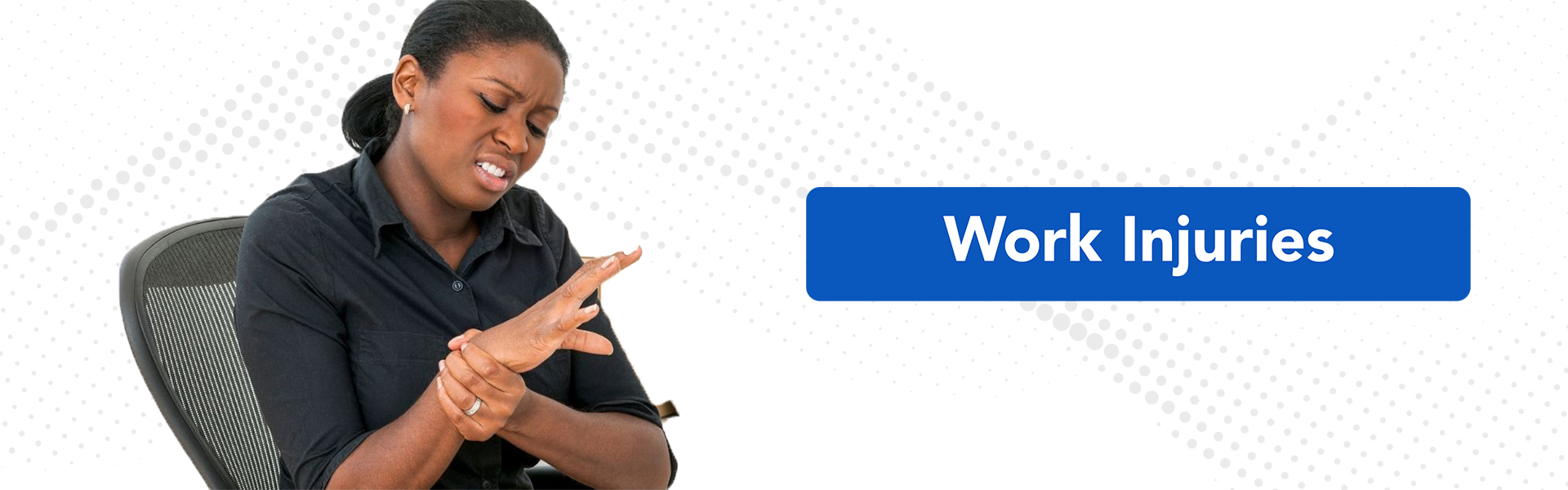
Work Injuries
Hurt at work? We help you heal, return, and protect your long-term function.
A work injury can hit fast—a sudden lift, a slip on a wet floor, a twist getting out of a truck—or build slowly over months of repetitive tasks. Either way, you’re left dealing with:
- Pain and stiffness
- Worry about your job and paycheck
- Calls from workers’ comp, HR, or a nurse case manager
At Timpanogos Physical Therapy, we help you sort out both sides of a work injury:
- Getting your body better (less pain, more strength, better movement)
- Navigating the work comp process with clear communication and objective documentation
We also offer Functional Capacity Evaluations (FCEs) when needed to clarify what you can safely do at work.
Common work injuries we treat
Work injuries show up in all kinds of ways, including:
- Low back pain and strains – lifting, bending, twisting, or prolonged sitting/standing
- Neck and shoulder pain – overhead work, reaching, awkward positions, computer setups
- Rotator cuff and shoulder problems – repetitive lifting, pushing, pulling, or forceful tasks
- Elbow, wrist, and hand issues – gripping tools, repetitive motions, keyboard/mouse use, vibration
- Hip, knee, and ankle injuries – slips, trips, falls, ladder incidents, uneven surfaces
- Overuse and repetitive strain injuries – tendinitis, tendinopathy, “overuse” aches that don’t go away
- Post-surgical work injuries – when a work-related injury leads to surgery, and you need a solid plan to get back
You don’t need a perfect diagnosis before you see us—part of our job is helping sort that out.
How we help with work injuries
1. Evaluation: what’s really going on?
At your first visit, we will:
- Listen to how the injury happened and what your job actually looks like (not just what’s on paper)
- Check movement, strength, flexibility, and nerve involvement
- Look at posture, lifting mechanics, and work-relevant movements
- Screen for anything that might need further medical workup
If we feel imaging is appropriate, we can order X-rays or MRIs as needed or coordinate with your occupational medicine provider, surgeon, or primary care provider.
2. Treatment plan built around your job
We design rehab with your actual work tasks in mind, not just generic “back stretches.”
Your plan may include:
- Manual therapy
- Hands-on work to calm down tight, overworked muscles
- Joint mobilization for the spine and extremities to restore motion
- Targeted exercise
- Early-stage exercises to slowly reduce pain and stiffness
- Progressive strengthening for the muscles you rely on at work—back, core, shoulders, legs, grip
- Functional drills that mimic lifting, carrying, pushing, pulling, reaching, or prolonged standing/sitting
- Movement and body mechanics coaching
- Safer ways to lift, reach, or perform repetitive tasks
- Strategies to pace your day so you can get your work done without constant flare-ups
- Technology where appropriate
- Shockwave therapy for stubborn tendon or soft-tissue issues
- EMTT (Electromagnetic Transduction Therapy) to support recovery and calm irritable tissues
- Red & near-infrared light therapy to support healing and reduce post-session soreness
We adjust as we go based on how you respond—not just on a calendar.
How we work with workers’ compensation
Work injuries usually involve workers’ compensation insurance (and often a whole cast of characters: adjusters, case managers, HR, sometimes attorneys).
We’re used to that world.
We routinely:
- Communicate with workers’ comp adjusters and nurse case managers about your progress, restrictions, and needs
- Share appropriate documentation with your provider team (occupational medicine, surgeons, etc.)
- Help clarify work restrictions (how much you can lift, how long you can stand, what positions are safe)
- Support transition to light-duty, modified tasks, or full-duty return when you’re ready
Our focus is always the same:
Help you recover as fully as possible
+
Give the work comp system clear, honest information about what you can safely do.
So you’re not stuck between “go back too soon and flare” or “stay out forever and get nowhere.”
Functional Capacity Evaluations (FCEs) for work injuries
Sometimes, in work comp cases, the big questions become:
- “Can this person safely return to their original job?”
- “What should their permanent restrictions be?”
- “Is a different role or job level more appropriate?”
That’s where a Functional Capacity Evaluation (FCE) can be incredibly useful.
What is an FCE?
An FCE is a detailed, structured assessment of your physical abilities and tolerances as they relate to work. It typically includes standardized testing of:
- Lifting and carrying – how much weight, from what heights, how often
- Pushing and pulling
- Standing, walking, and sitting time tolerances
- Reaching, bending, squatting, kneeling, climbing
- Grip and hand function, when relevant
- Consistency, safety, and effort over a more extended testing period
We use established protocols and software systems to produce objective, defensible reports—not just opinions.
How an FCE can help your work comp case
A well-performed FCE can:
- Give your doctor, adjuster, and employer clear information about what you can safely do
- Help determine if you can return to whole duty, modified duty, or need permanent restrictions
- Support decisions about job accommodations, retraining, or long-term planning
- Reduce guesswork and conflict by replacing “I feel” with measured abilities
FCEs are often used:
- Near maximum medical improvement (MMI)
- When there are questions about safe return to work
- When permanent restrictions or disability ratings are being considered
Our goal is not to push you to “pass” or “fail”—it’s to represent what your body can handle, so decisions are accurately grounded in reality.
Work injuries + communication: we help coordinate the team
These cases often involve many stakeholders. We help keep the rehab side organized by:
- Providing clear, timely notes and progress updates
- Responding to questions from adjusters or nurse case managers about your function and restrictions
- Coordinating with physicians, surgeons, and other providers so your plan is aligned
- Making sure you understand, in plain language, what each part of your team is focused on
You focus on showing up and doing the work. We focus on getting your body better and keeping everyone else in the loop.
FAQs
Do I need a referral for work comp PT?
This depends on your specific work comp carrier and doctor. Many cases come with a referral from an occupational medicine clinic or physician. If you’re not sure, we can help you sort through what your adjuster or case manager requires.
Will workers’ comp pay for my therapy?
In approved work comp claims, authorized treatment is typically covered by the work comp insurance carrier. We’ll work within their authorization process and let you know if anything changes.
When is an FCE done for work injuries?
Usually, near the end of care, when your condition has plateaued and your team needs to know what you can safely do long term. It’s not usually the first step, but a tool used when big decisions are being made.
What if I’m still in a lot of pain but being pushed to go back to my whole duty?
You’re not the first person in that situation. Rehab, documentation, and sometimes an FCE can help clarify what’s reasonable and safe for you. We’ll advocate for what your body is actually demonstrating, not just what a form says.
Hurt at work and not sure what to do next?
If you’ve been injured on the job and you’re stuck between pain, paperwork, and pressure to “just get back out there,” you don’t have to figure it out alone.
Schedule a work injury evaluation at Timpanogos Physical Therapy, and we’ll:
- Identify what’s really going on
- Build a rehab plan tailored to your job and your body
- Coordinate with your workers’ comp team
- Use tools like Functional Capacity Evaluations when needed to clarify your safe work abilities
So you’re not just cleared to work—you’re actually ready to work.